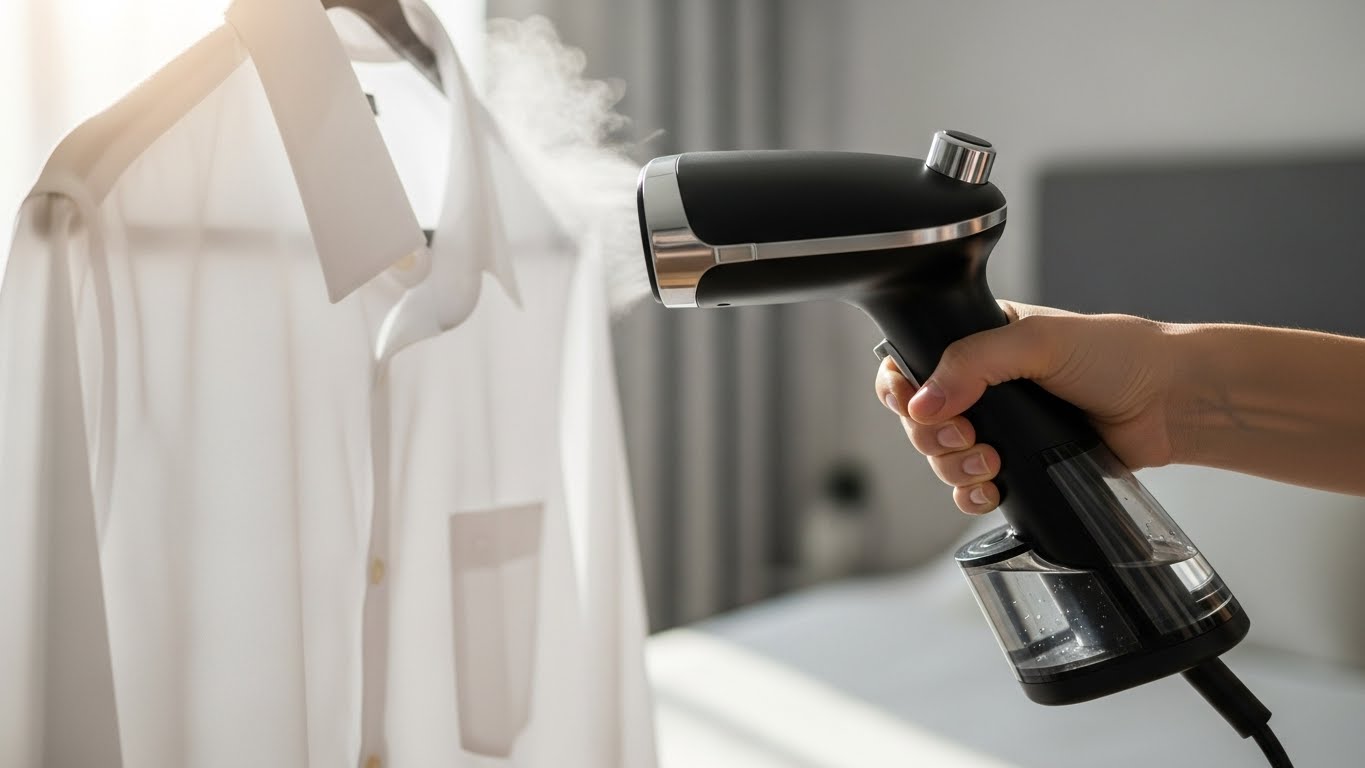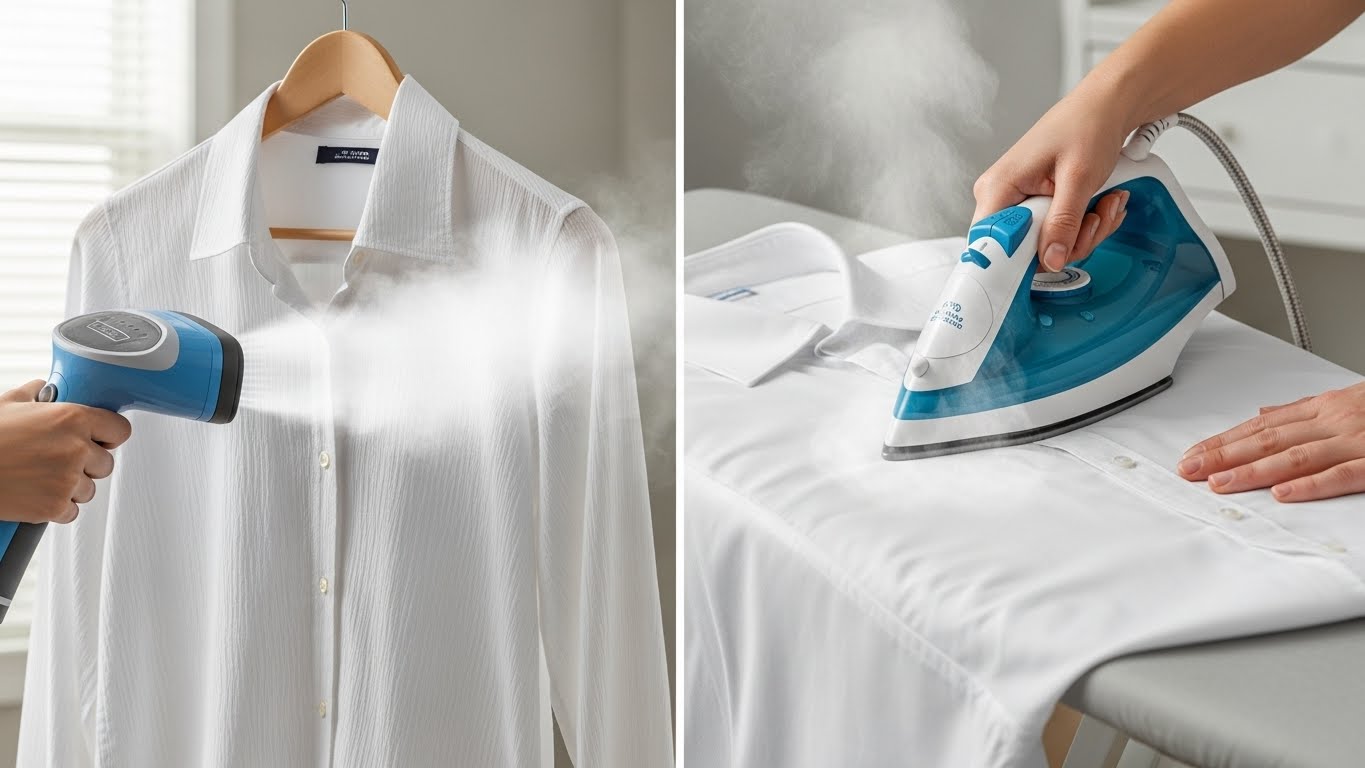

A garment steamer is one of the easiest ways to remove wrinkles—until it spits water, leaves spots, or you accidentally “over-steam” a delicate fabric. The good news: most problems come from a few fixable habits.
This is a brand-neutral, real-life guide to using a handheld steamer safely—no water spots, no fabric damage, and no scary surprises.
Before You Start: The 30-Second Safety Setup
1) Check the fabric label (quick rule)
- Safe to steam (usually): cotton, polyester blends, wool (carefully), most synthetics
- Use extra caution: silk, rayon/viscose, satin, velvet, leather/suede
- Do NOT steam directly: waxed fabrics, plastic-coated materials, anything that says “Do not steam”
If you’re unsure, steam inside seam area first as a test.
2) Use a sturdy hanger
A strong hanger makes steaming easier and safer because the fabric hangs evenly and doesn’t swing around.
3) Give yourself airflow + space
Steam is hot. Stand in a spot where you’re not boxed in, and keep kids/pets away.
Water Spots: Why They Happen (and How to Prevent Them)
Water spots usually come from one of these:
1) Using the steamer before it’s fully heated
If the steamer isn’t hot enough, it can spit droplets instead of producing clean steam.
Fix:
Let it heat fully (usually 30–60 seconds) and steam into the air for 5–10 seconds before touching fabric.
2) Overfilling the tank
Too much water can cause dripping and sputtering.
Fix:
Fill to the max line—never above it.
3) Tilting the steamer too much
Many handheld steamers leak when held sideways or upside down.
Fix:
Keep it mostly upright. Small angles are fine; “horizontal ironing” angles often cause drips.
4) Hard water mineral buildup
Mineral buildup can cause spitting and clogging over time.
Fix:
Use distilled water (best) or a mix of distilled + tap if your manual allows.
Safe Steaming Technique (Works on 90% of Clothes)
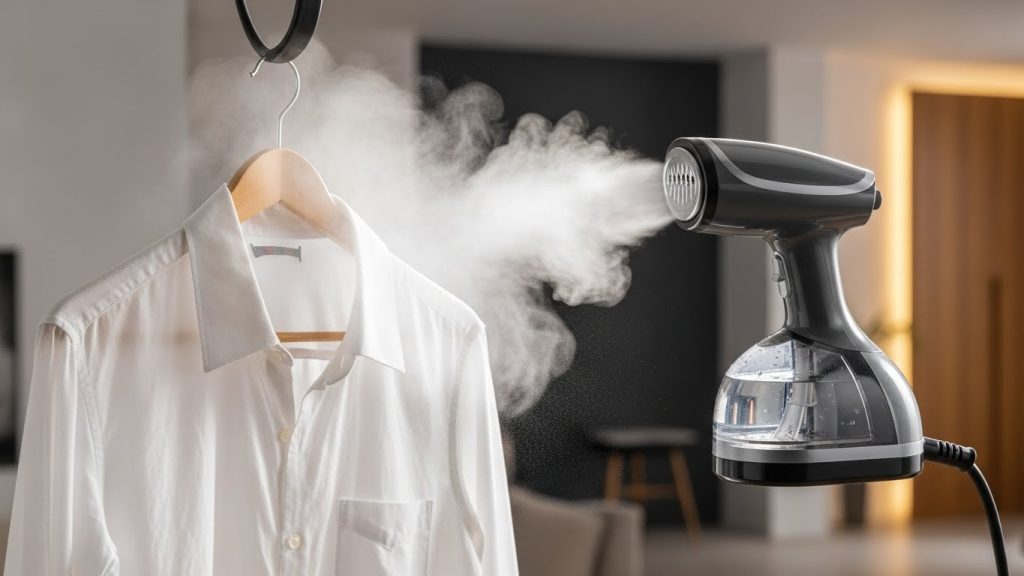
Step 1: Hang the garment and smooth it with your free hand
Use gentle tension—don’t stretch the fabric hard.
Step 2: Keep the head close, not pressed hard
- Hold the steamer head 1–2 inches away from delicate fabrics
- On tougher fabrics (cotton blends), you can go a bit closer
Step 3: Steam in slow vertical passes
Go top to bottom in sections:
- Shoulder → chest → sleeves → front → back
Step 4: Don’t over-steam one spot
If you hover too long, you can:
- create water spots
- flatten texture
- weaken delicate fibers
Rule: 2–3 seconds per area, then move.
Step 5: Let it dry
Steam adds moisture. Give it 2–5 minutes on the hanger before wearing.
How to Avoid Fabric Damage (By Fabric Type)
Cotton / cotton blends
- Steam close and use longer passes
- For collars/cuffs: steam the inside first, then outside
Polyester / synthetics
- Use lower steam intensity if available
- Keep moving to avoid heat concentration
Wool
- Steam lightly, don’t soak it
- Let it fully dry before storing (prevents musty smell)
Silk / satin / rayon (delicate zone)
- Use low setting if possible
- Keep the steamer a little farther away
- Test inside seam first
- Avoid soaking—quick passes only
Velvet / textured fabrics
- Steam from a distance
- Never press hard against the fabric (can crush texture)
Leather / suede
- Generally avoid direct steaming
If you must, use indirect steam from far away and consult care instructions.
The “No Burn” Safety Rules (Important)
- Never point steam at your hand to “test it” (it’s hotter than it looks)
- Use a heat-resistant glove if you have one, especially for sleeves and tight areas
- Keep the cord out of your way
- Place the steamer on a stable surface when resting it—never on a bed or fabric pile
- Unplug after use and let it cool completely before storing
Best Practices for Zero Spots + Best Results
1) Start with the inside of thick areas
Collars, cuffs, waistbands: inside first, then outside.
2) Use a steamer brush attachment (if included)
It helps steam penetrate thick fabric and can reduce how many passes you need.
3) Don’t steam dirty clothes
Steam can “set” some stains or odors. If it’s visibly dirty, wash first.
4) Clean the steamer regularly
A quick routine:
- Empty tank after each use
- Rinse tank weekly
- Descale as recommended (especially if you use tap water)
Troubleshooting (Fast Fixes)
It’s spitting water:
Wait longer to heat, don’t overfill, hold upright, use distilled water.
Wrinkles aren’t coming out:
Use slower passes, add gentle tension with your free hand, use brush attachment, steam the inside first.
Fabric looks shiny or weird:
You’re too close or hovering too long—back up and keep moving. Test on inside seam for delicate fabrics.
Musty smell after steaming:
The garment didn’t dry fully—hang longer in airflow before closet.
Quick Checklist (Save This)
✅ Heat fully + purge steam 5–10 seconds
✅ Don’t overfill
✅ Keep upright
✅ Slow vertical passes, keep moving
✅ Distilled water if possible
✅ Let clothes dry 2–5 minutes
✅ Empty tank after use