Most people buy an air purifier, turn it on… and assume it’s working at full potential.
In reality, placement, settings, and filter care can make the difference between “I think it helps?” and “Wow—my room actually feels better.”
This guide is experience-based and brand-neutral—no product links—just the practical steps that help an air purifier perform like it should.
1) Start With the Right Goal (So You Use the Right Settings)

Air purifiers mainly help with:
- Dust & fine particles (especially with HEPA-style filters)
- Pollen & allergens
- Pet dander
- Smoke particles (wildfire smoke, cooking smoke)
- Some odors (with activated carbon—results vary)
They do not replace ventilation for:
- Strong chemical fumes (paint, solvents)
- Mold remediation (you still need to fix moisture and remove mold)
- High CO2 / stale air (that’s a ventilation issue, not filtration)
2) Best Placement: Where to Put an Air Purifier (So It Actually Works)
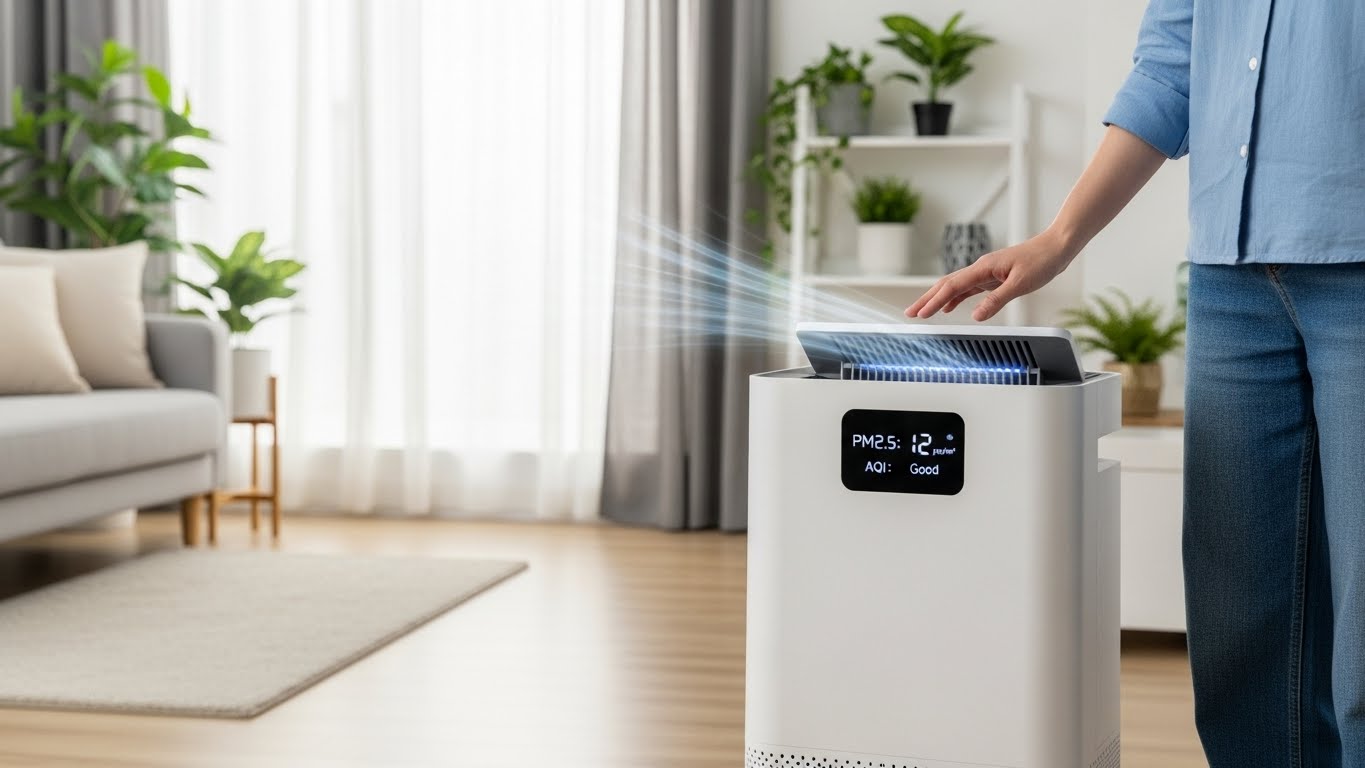
The “best” spot in most bedrooms/living rooms
- Near the center of the room or where air circulates well
- 6–10 feet from your bed (close enough to matter, not blowing directly on you)
- A few feet away from walls and furniture
Clearance rule (simple and effective)
Give it breathing room:
- At least 8–12 inches of space on all sides (more if the intake is on the back)
- Don’t block the intake or the top exhaust
Don’t do these (common mistakes)
- In a corner behind a chair or curtain (kills airflow)
- Under a desk or crammed between furniture
- Right next to an open window or door (it’ll fight constant new air)
- On carpet if the intake is low and lint-heavy (unless the model is designed for it)
If you’re targeting a specific problem
- Allergies at night: put it closer to the bed (still not blowing at your face)
- Pet dander: place it where your pet spends time (near couch or pet bed)
- Smoke: run it in the room where smoke enters, and keep doors/windows mostly closed while filtering
3) Best Settings: What to Run During the Day vs Night
For daily use (most people)
- Use Auto mode if your purifier has a good sensor
- Or run Medium for a few hours, then switch to Low for maintenance
For sleep (quiet + effective)
- Run High for 30–60 minutes before bed (pre-clean the air)
- Then switch to Sleep/Low overnight
This usually gives the best balance of clean air without noise.
For smoke / wildfire days
- Close windows and doors as much as possible
- Run the purifier on High continuously
- If you have multiple rooms, prioritize the room you’re spending time in (bedroom at night)
4) How Long Should You Run an Air Purifier?
Short answer: More is usually better, because air is always getting “re-dirtied” by you, pets, fabrics, and outdoor leakage.
A realistic routine:
- Bedrooms: overnight + 1 hour before bed
- Living rooms: during the day when people are active
- Allergy season or pets: daily, not “once in a while”
If you only run it occasionally, it’s like vacuuming once a month—helpful, but not transformative.
5) Filter Changes: When, How, and What to Watch For
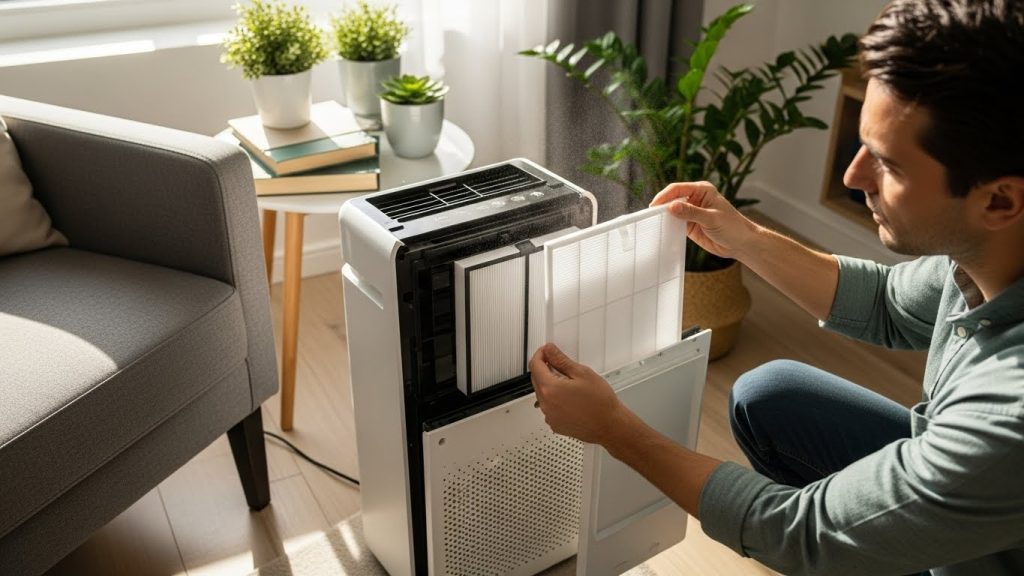
Typical filter types
- Pre-filter: catches hair and large dust (sometimes washable)
- HEPA / HEPA-style: captures fine particles
- Activated carbon: helps with odors (and some gases)
How often to change filters (general rule)
It depends on your home, but here’s a practical guide:
- Pre-filter: clean every 2–4 weeks (more with pets)
- HEPA filter: every 6–12 months
- Carbon filter: every 3–6 months (odor control drops faster)
Always follow your purifier’s manual if it gives a specific schedule.
Signs your filter needs attention
- You smell dust or musty air when it runs
- Airflow feels weaker even on the same fan setting
- Allergy symptoms creep back
- The filter looks gray/brown quickly (pets/smoke will do this)
Pro tip: pre-filter = performance booster
If your purifier has a pre-filter, keeping it clean can:
- Improve airflow
- Lower noise (because the fan works less)
- Extend HEPA filter life
6) Extra Tips That Make a Big Difference
Keep doors consistent
If you’re cleaning a bedroom:
- Door closed = faster and more noticeable results
Door open = purifier is trying to clean the whole house (inefficient).
Don’t rely on “fragrance features”
If a unit has scented pads, I’d personally avoid using them for sleep—fragrance can irritate sensitive noses and doesn’t improve air quality.
Pair with basic habits
Air purifiers work best when you also:
- Wash bedding weekly (dust mites/pollen)
- Vacuum rugs regularly (especially with pets)
- Reduce clutter (dust loves fabrics and piles)
7) Quick Setup Checklist (Do This Once)
- Unwrap filter packaging (people forget this!)
- Place purifier with 8–12″ clearance
- Run High for 30–60 minutes (first-time “flush”)
- Set a reminder for pre-filter cleaning and filter replacement
- Use night routine: High → Sleep/Low
FAQ (Quick Answers)
Should I run it 24/7?
If you can, yes—especially on low. It’s usually the most consistent way to keep air clean.
Is Auto mode always best?
Auto is great if the sensor is responsive. If it feels too “lazy,” use a manual routine: High for a bit, then Low.
Can it remove odors completely?
It can help, especially with carbon filters, but strong odors often require removing the source and ventilating.
Where should I place it in a bedroom?
Near the bed but not blowing directly on you, with good clearance—usually 6–10 feet away.