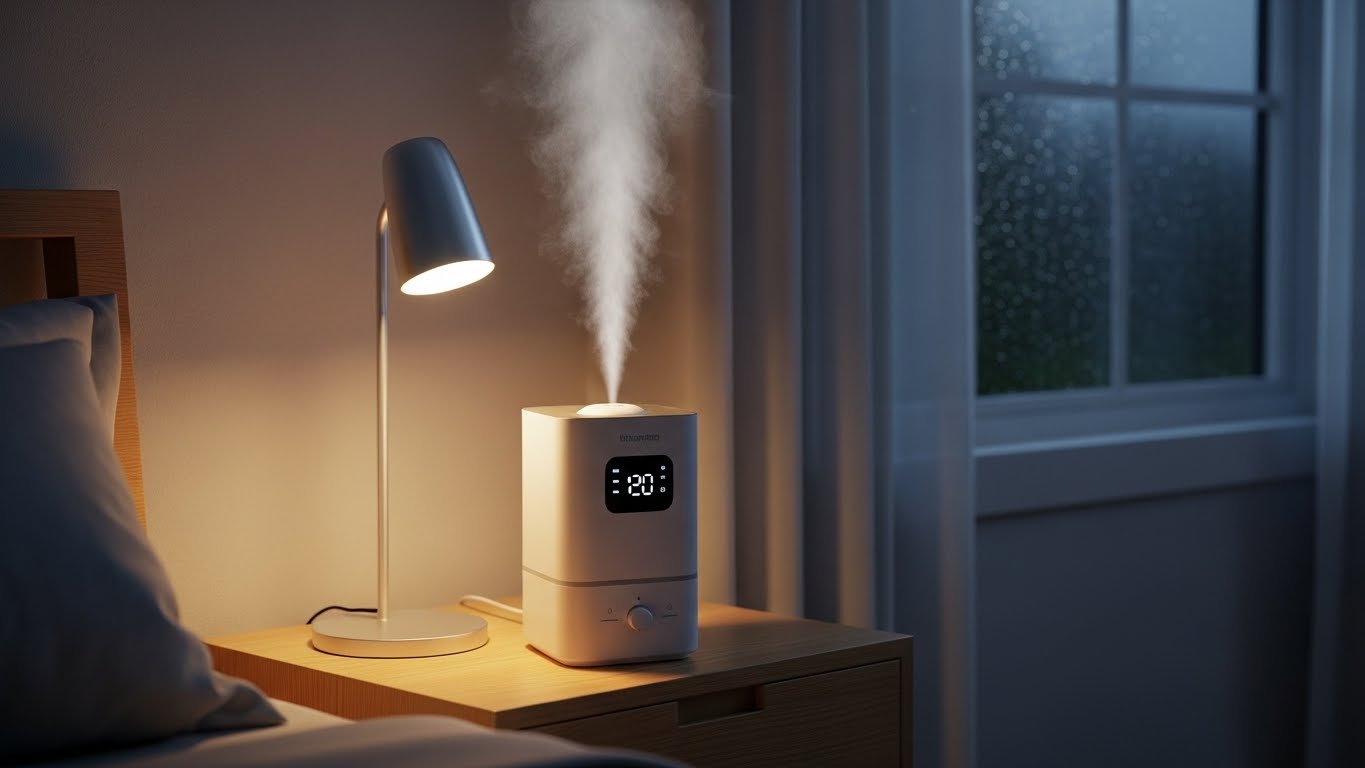
A humidifier can make your bedroom feel instantly better—less dry throat, less static, better sleep. But if you run it the wrong way, it can also create problems like condensation, musty smells, or even mold.
Here’s the practical, brand-neutral guide to using a humidifier safely: the right humidity range, where to place it, and how to keep it clean without turning it into another weekly chore.
1) Best Humidity Level (The “Safe + Comfortable” Range)
The sweet spot for most homes
40%–50% indoor humidity is ideal for comfort and sleep.
Safe range (most situations)
30%–60% is generally acceptable—but the goal is to stay closer to the middle.
When humidity gets risky
- Above ~60% consistently can raise mold and dust mite risk
- Below ~30–35% often causes dry skin, irritated sinuses, and static
The easiest way to get this right
Use a hygrometer (small humidity meter). They’re cheap and remove all the guessing.
Quick rule: If you see condensation on windows, you’re probably running it too high.
2) Placement: Where to Put a Humidifier (So It Works Without Causing Damage)

Best placement in a bedroom
- Put it 3–6 feet away from your bed
- Aim mist away from your face
- Place it where air can circulate (not trapped behind curtains)
Height matters
- Best: on a dresser or sturdy table
- Avoid: directly on the floor (more dust intake, more chance of damp floors)
Keep it away from:
- Walls (prevents damp spots and paint damage)
- Wood furniture (mist can cause warping over time)
- Electronics (obvious but easy to forget)
- Upholstery (sofas/curtains can hold moisture and smell)
Clearance rule
Give it breathing room: at least 8–12 inches around the unit.
3) Best Settings (Day vs Night)
For sleep
- Start on medium/high for 30–60 minutes before bed
- Then switch to low or sleep mode overnight
For very dry air
Run longer, but keep humidity under control (again, the hygrometer helps).
What NOT to do
- Don’t run it on max 24/7 with no monitoring
That’s how you end up with condensation and musty corners.
4) Cool Mist vs Warm Mist (Safety Notes)

Cool mist (most common for bedrooms)
- Generally safer around kids and pets (no hot steam)
- Quiet and comfortable
- Needs consistent cleaning to avoid buildup
Warm mist
- Can feel soothing in winter
- Hot steam burn risk (not ideal near children/pets)
- Still needs cleaning, but often fewer “white dust” issues
5) Cleaning Tips (The Part That Actually Matters)
A humidifier is only helpful if it’s clean. Otherwise, you can end up blowing mineral dust, bacteria, or mold spores into the air.
Daily (takes 30 seconds)
- Empty leftover water
- Quick rinse (especially the base/tank)
Every 3–7 days (realistic routine)
- Wash tank and base with warm water
- Use white vinegar for mineral buildup (soak 15–30 minutes)
- Rinse thoroughly and let dry
Weekly if you have:
- Hard water
- Pets
- Allergy-sensitive household
(You’ll get buildup faster.)
Important: Never leave water sitting
Stagnant water is what causes the “humidifier smells weird” problem.
6) Water Tips (To Prevent White Dust + Buildup)
Best option
- Distilled water (least buildup, least “white dust”)
If you use tap water
- Clean more often
- Expect mineral buildup sooner
- If you notice white dust on furniture, switch to distilled water
7) Common Mistakes to Avoid
- Placing it too close to the bed → damp bedding, discomfort
- Aiming mist at a wall → mold-friendly damp spots
- Running it without measuring humidity → over-humidifying
- Never cleaning it → musty smell and questionable air quality
- Using essential oils in a unit not designed for it → damage or residue
8) Quick “Safe Use” Checklist
✅ Target 40–50% humidity
✅ Place 3–6 ft from the bed, on a raised surface
✅ Keep mist away from walls/wood/electronics
✅ Use low/sleep mode overnight
✅ Empty and rinse daily
✅ Deep clean weekly (vinegar soak helps)
✅ Use distilled water if possible
FAQ
Should I run a humidifier all night?
Yes—if humidity stays in range (ideally 40–50%) and the unit is clean.
Why do I get condensation on windows?
Humidity is too high or airflow is poor. Turn the mist down and move the unit away from windows.
Is “white dust” dangerous?
It’s usually minerals from tap water. Switch to distilled water and clean the unit.